

Istanbul is a city of pastries. Baklava has its own vocabulary and historic houses here, Turkish delight has been sold since the 18th century, and the muhallebici serve milk puddings you find almost nowhere else. This guide presents the specialities to try, the best-known addresses, how to pick good baklava and what you can carry home in your suitcase. We give no prices: they change several times a year and are displayed by weight or by piece in the window. ## Baklava: what to know 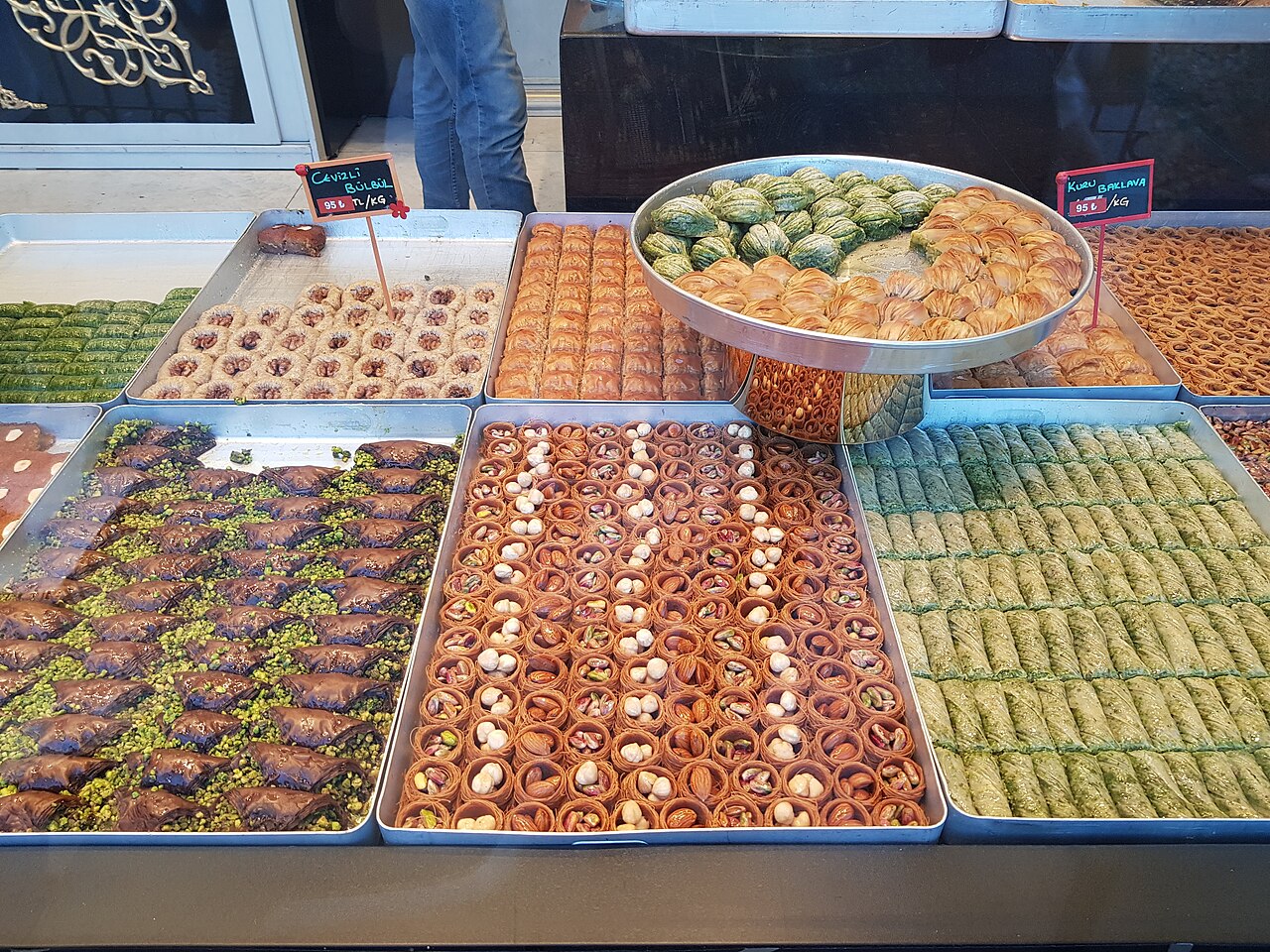 Baklava is a millefeuille of very thin filo pastry, buttered sheet by sheet, filled with pistachios or walnuts and soaked in syrup when it comes out of the oven. The most prized version uses pistachios from Gaziantep, a city in south-eastern Turkey. A few signs of good baklava: - **the layers are crisp and distinct**, not soggy: the syrup should have soaked in without drowning the pastry; - **the pistachio is green**, not grey or yellowed; - **you can smell the butter**, but it leaves no greasy film; - **the syrup is not cloying**: the sugar should stay in the background. The shapes each have a name: **havuç dilimi** (carrot-slice shape), **şöbiyet** (filled with cream), **sarığı burma** (twisted), **dolama** (rolled), **fıstıklı** (with pistachios) and **cevizli** (with walnuts). **Kuru baklava**, "dry baklava", has less syrup. ## The baklava houses ### Hafız Mustafa 1864 This house, which puts its founding date in its name, runs several pastry shops in Istanbul, including one in Eminönü, near the Spice Bazaar. It sells baklava, Turkish delight and Turkish pastries, with salons to sit down in. ### Karaköy Güllüoğlu This pastry shop in Karaköy, in the district described in our guide to Galata and Karaköy, is one of the best known in the city for baklava. It sells from the window, by weight, and offers boxes to take away. Its desserts can also be eaten on the spot. ### Other addresses You will find good baklava in several well-reputed pastry shops in the city; the best-known names have several branches, and they rarely change. In every case, ask to taste, look at the window and pick the trays that have just come out of the oven. ## Turkish delight (lokum) 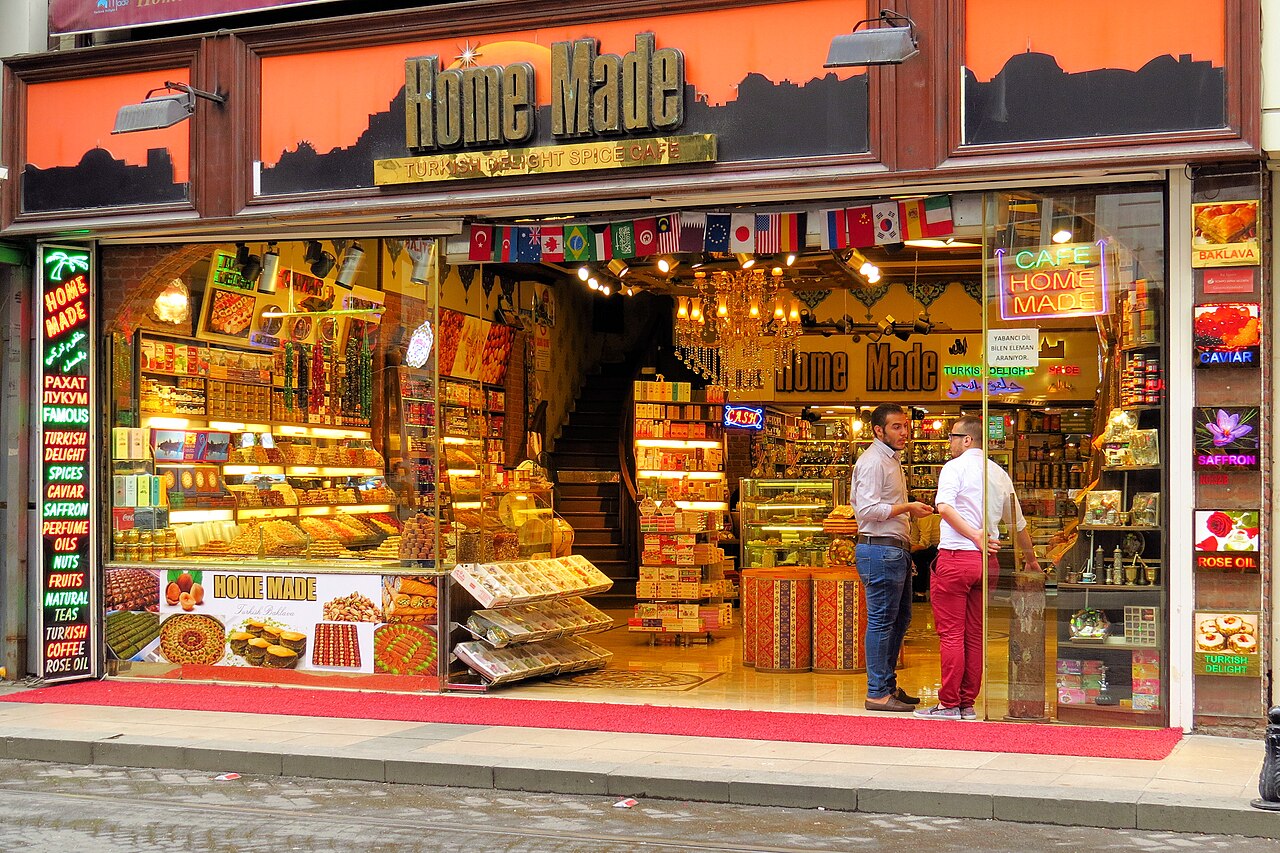 Lokum is a paste of sugar and starch flavoured with rose, mint, lemon or fruit and filled with pistachios, hazelnuts or walnuts. The **Hacı Bekir** house, founded in 1777 by its own account and based in Eminönü, is the one that popularised Turkish delight in Istanbul. Its windows are one of the classic stops of the city. Rose and pistachio flavours are the most traditional. Avoid boxes sold on the most touristy streets without being able to taste: good lokum is not hard, does not stick to the fingers and cuts cleanly. ## Other desserts to try 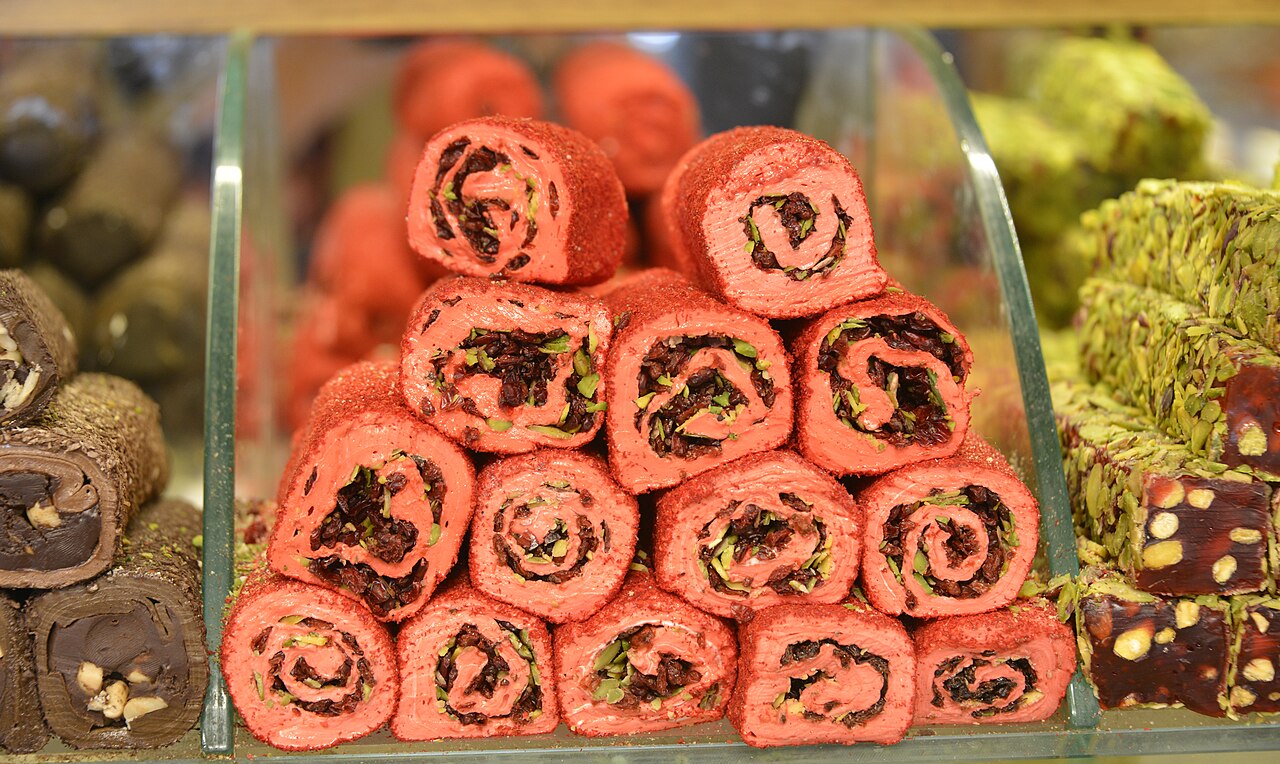 - **Künefe**: shredded pastry (kadayıf) around melted fresh cheese, served hot with syrup and pistachios. It is best eaten the moment it is made, in a restaurant that prepares it in front of you. - **Sütlaç**: rice pudding, often served baked until golden, the standard dessert of the lokanta. - **Kazandibi** and **tavuk göğsü**: milk puddings, one caramelised at the bottom of the pan and the other made with shredded chicken breast, a palace speciality. - **Aşure**, a dried-fruit pudding made in the month of Muharram. - **Lokma**: small fried dough balls soaked in syrup, handed out at festivals and funerals, also sold in pastry shops. - **İnci profiteroles**: the İnci pastry shop on İstiklal Avenue is known for its profiteroles with hot chocolate sauce. - **Maraş ice cream** (dondurma): stretchy, made with milk, sugar and salep, often cut with a knife. ## Where to have a dessert by district | District | What to do there | |---|---| | Eminönü | Hafız Mustafa 1864, Hacı Bekir and the shops of the Spice Bazaar | | Karaköy | Karaköy Güllüoğlu, baklava before or after a walk in Galata | | Beyoğlu | İnci, on İstiklal Avenue | | Kadıköy | Market pastry shops and ice-cream parlours, see Kadıköy and Moda | | Üsküdar | Waterfront pastry shops, see Üsküdar | ## What to bring home, and how - **Turkish delight** keeps well: ask for a sealed box and keep it dry. - **Baklava** travels in a rigid box: ask for it wrapped for the plane and keep it away from heat. It keeps a few days, not several weeks. - **Pistachios, walnuts and dried fruit** are bought by weight in the bazaar: see our guide to shopping in Istanbul. - **At customs**, commercial sweets are generally accepted, but the rules on animal-derived products differ by country: check those of yours. ## Practical tips - Pastry shops open early and close late; baklava is best fresh, at the moment it is served. - Turkish coffee, tea and ayran go with it: see our guide to what to eat in Istanbul. - For other tables, see the Ottoman cuisine restaurants; for a meat-free diet, our guide to eating vegetarian in Istanbul (baklava contains butter: it is not vegan).
See in this guide


What next?
More like this

Plan your visit

